Street Photography & Street Portraits in Chiang Mai and in France: When the Country Changes the Practice
- Tatiana Mocchetti
- Feb 20
- 4 min read

November & December 2025 in France
Street photography is often described as universal. A camera, a street, a decisive moment. But after two months in France, I understood something differently. Street photography may travel well. Street portrait photography does not. The country changes the practice more than the lens ever will.
I left Chiang Mai thinking continuity would be simple. I packed my Canon, my 85mm, and the assumption that my portrait rhythm would follow me. Instead, I found myself slowing down in ways I hadn’t anticipated. The streets were alive, but the exchange was not.
What follows is not an apology for the pause. It is a field note about what shifts when you change countries, what disappears when you stop asking, and how I found my way back to portraits in Chiang Mai.







The Plan I Carried In
I did not arrive in France with a dramatic project. My plan was modest: keep walking, keep observing, keep asking for portraits when the moment felt right. In Chiang Mai, this approach works because the social temperature allows it. A smile is often returned. A nod is acknowledged. Even refusal feels gentle.
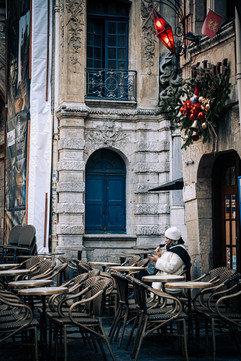
In France, the same gestures landed differently. Eye contact broke quickly. Approaching someone required more internal negotiation. It was not hostility. It was distance. Public space felt compartmentalized. People occupied it without necessarily inviting interaction.
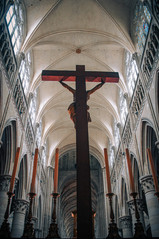
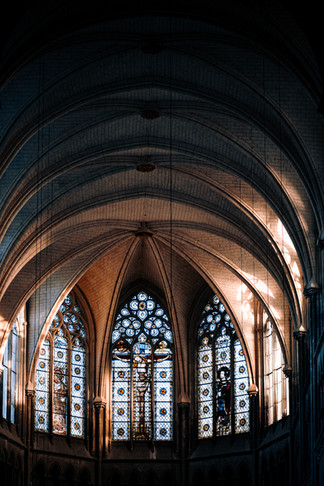
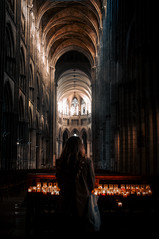
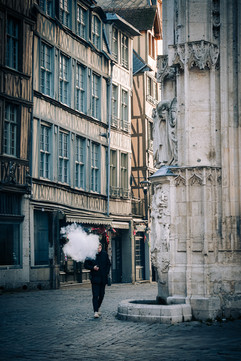
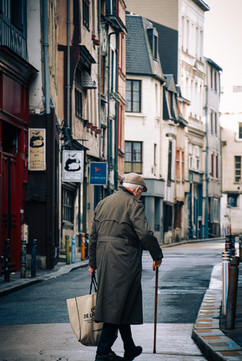
I adapted by shooting more observational street photography. Architecture, gestures, silhouettes in motion. It felt safer. Less relational. Less exposed.
But something essential was missing.






The Walk I Actually Took
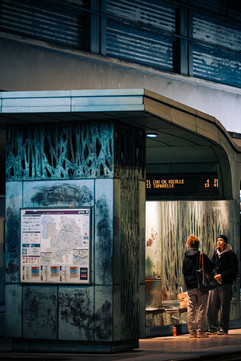
One afternoon, I went to the Gare de Rouen. Train stations usually offer everything a street photographer needs: waiting, anticipation, emotional thresholds. I began photographing quietly, working with light falling across coats and reflections on glass.
Within minutes, I was approached and informed that photography with a camera required prior authorization. With a phone, it would have been acceptable. With a camera, it was not.
The rule itself was not shocking. What unsettled me was the distinction. The act was identical. The tool made the difference. A visible camera signaled intention. Intention invited regulation.
I left the station, but what lingered was not frustration. It was hesitation. After that day, I walked more and photographed less. Portraits felt heavier to initiate. Street photography remained possible, but the relational aspect of my work thinned.
The two months became long not because I lacked subjects, but because I lacked alignment.
Small Experiments, Honest Check-in
In France, I tried to adapt. I worked at greater distance. I shot more candid scenes. I told myself that observation was enough. But the truth was clearer than I wanted to admit: street portrait photography is relational by nature, and relation depends on cultural context.
Without the small exchanges that define my work in Chiang Mai, I defaulted to detachment. The images were technically fine. They were not emotionally grounded.
By the time I returned to Thailand, hesitation had become habit.




What “Nothing” Taught Me (Again)
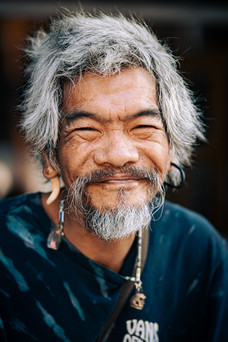
The pause taught me that confidence in street portrait photography is perishable. It does not disappear dramatically. It fades quietly when not exercised. The courage to ask is a muscle sustained by repetition.
I also understood that countries shape courage. In Chiang Mai, politeness circulates visibly. Smiles are social currency. In France, public interaction with strangers is more reserved. Neither environment is better. They simply require different strategies.
Street photography adapts more easily because it allows distance. Street portraits require negotiation. When the negotiation feels heavier, the portraits diminish.
The two months were not empty. They clarified what kind of photographer I am. My work depends on brief human acknowledgment. Without that exchange, the frame feels incomplete.



A Return Plan (Same Practice, Different Terms)
Coming back to Chiang Mai did not immediately restore rhythm. The streets were familiar, but my reflexes were slower. I saw faces and hesitated. I framed scenes and lowered the camera.
The turning point came through public celebration. The Chiang Mai Flower Festival provided a softer re-entry into portrait practice. Festivals alter the social contract. Participants expect visibility. They are dressed intentionally. They are already in a performative space.
I approached a child in traditional dress and asked for a portrait. The exchange was simple and unforced. It was not the image that mattered. It was the asking.
A few days later, during Chinese New Year in Chiang Mai, I worked from the edges of the parade. Instead of photographing performers at the center, I focused on observers. An elder watching quietly. A child waiting between drumbeats. A woman adjusting a lantern before stepping back into the crowd.
That is where my portraits live, beside spectacle, not inside it.
With each small exchange, hesitation loosened.

Chasing the “Perfect Shot”? (A Cultural Question)
Changing countries forces you to confront what you are truly chasing. In France, I realized I had been relying on the ease of relational space in Thailand. When that ease disappeared, I mistook the discomfort for creative blockage.
It was not blockage. It was context.
Street photography can function almost anywhere because it does not require consent. Street portrait photography demands a cultural reading of space. It requires sensitivity to local norms, legal frameworks, and unspoken boundaries.
The lesson was not about equipment. It was about adaptability. The country is not a backdrop. It is part of the negotiation.

Conclusion
Street photography travels well. Street portrait photography does not. It must be rebuilt each time geography changes.
France slowed me down. Chiang Mai reopened the exchange. The two-month pause felt long because relational practice weakens without repetition. But it also clarified what matters in my work. I do not photograph only moments. I photograph acknowledgment.
If you move between countries with your camera, understand this: technique is portable. Confidence is contextual. And sometimes, rebuilding begins with one quiet question asked in the middle of a festival crowd.
Even after two silent months.


Comments