Fake Travel Photos: When Authenticity Becomes Performance
- Tatiana Mocchetti
- Aug 20, 2025
- 7 min read

Travel photography has always been more than just images. It’s a way to document stories, preserve fleeting encounters, and witness a world that might otherwise go unnoticed. But today, much of what circulates online as “travel photography” is something else entirely. Instead of raw moments, we often find staged performances designed for tourists and cameras.
Recently, I came across PetaPixel’s “Library of Fake Travel Photos”, a fascinating yet unsettling catalog of staged photography across Asia. The piece is a guide for competition judges to recognize whether the “travel” photos they’re judging are genuine or fake — and it confirmed something I’ve felt on my own photographic journey: too much of what we call travel photography is no longer authentic.

My Disappointment in Hanoi’s Incense Village
Two years ago, I traveled to Hanoi with one particular dream: to capture the iconic scene of incense workers at Quang Phu Cau. I imagined vibrant red bundles drying under the sun, women carefully laying them out, smoke rising in the air.
When I arrived, reality was different. I was asked to pay before entering, which felt unusual but not unreasonable. But once inside, what I found was not work — it was theater.
There were ladders positioned for photographers, incense bundles arranged into perfect circles, and women sitting still in carefully composed patterns. Some tourists even sat in the middle of the incense piles, wearing conical hats provided at the entrance, to get their Instagram-perfect shot.
It wasn’t life. It wasn’t work. It was a stage.
The experience was disheartening because what I had wanted to capture — authenticity — had already been replaced by performance.





What Are Fake Travel Photos?
As the PetaPixel article explains, fake travel photos are images that look like authentic moments, but in reality are staged, organized, or pre-planned. Often, models are hired, props are set up, and the scene is designed to look candid when it’s not.
The difference between travel photography and conceptual photography is key:
Travel Photography: candid images captured as they happen, with the photographer as a witness.
Conceptual Photography: images created with intention, models, and design — closer to fashion or fine art.
There is nothing wrong with conceptual photography in itself. The issue comes when these images are presented as authentic, “lucky finds” during travel. The captions often mislead, painting stories of discovery that never happened.
This isn’t just about Hanoi. Across Asia — and beyond — entire industries now exist to stage cultural performances for photographers.
The McDonald’s of Travel Photography
The staged scenes described in PetaPixel’s article are repeated endlessly:
Fishermen casting nets in Ninh Binh or Inle Lake at sunrise.
Monks holding umbrellas in temples.
Salt workers carrying baskets in golden light.
Children running down sand dunes with tires.
These images win competitions, flood Instagram feeds, and gather likes. They have a strong “wow” factor, but little substance.
As the PetaPixel writer puts it, they are the McDonald’s of travel photography: tasty at first glance, but lacking in nutrition. They may look beautiful, but they don’t feed the soul or the story.
Why It Matters
Some might argue: what’s the harm? If the locals make money and the photographers get their images, isn’t everyone happy?
But the harm is real:
1. Cultural Distortion
When traditions are staged repeatedly, they stop being traditions. Locals adapt their behavior to meet photographers’ expectations. A fisherman who once worked quietly may now perform acrobatics daily for tourists instead of fishing. A monk may hold an umbrella indoors because it looks good in a photo.
2. Exploitation
In some cases, these staged scenes cross into exploitation. Children are paid to pose, women are presented as cultural “props,” and even wildlife is misused for photography. The famous cormorant fishermen in China, for instance, often mistreat their birds just to create more dramatic images for photographers.
3. Erosion of Creativity
When every photographer returns home with the same staged shot, originality disappears. Instead of learning patience, observation, and storytelling, many settle for ready-made scenes.
And for those of us who pursue authenticity, it creates a growing sense of frustration: how do we compete with staged perfection?
My Shift in Perspective
I’ll admit it — when I started photography, these staged images were the ones I admired. The iconic shots of incense workers, fishermen, monks, and markets inspired me to pick up a camera.
But my disappointment in Hanoi shifted something. I realized that chasing staged perfection would only lead me to disappointment again. Instead, I began to value the imperfect, the unexpected, and the unscripted.
Today, I’m drawn to:
A vendor’s tired hands arranging fruit at dawn.
A fisherman mending his nets, not for the camera but because his family depends on it.
A child’s fleeting glance before laughter takes over.
These moments may not look like postcards, but they carry truth. And truth, to me, is the essence of photography.
Examples of Staged Travel Photography
The PetaPixel article lists countless examples — here are a few that stand out, because I’ve either witnessed them or seen them endlessly reproduced:
The Fishermen of Inle Lake, Myanmar: balancing on one leg while casting nets. Once a real tradition, now often just a paid performance.
The Salt Fields of Vietnam: workers perfectly lined up at sunset. In reality, modern tools like wheelbarrows make these scenes outdated.
The Stilt Fishermen of Sri Lanka: locals literally build parking spots for tour buses, offering tourists price menus for staged shots.
The Sadhus of Varanasi, India: many are not holy men at all, but people hired to dress up for photos.
The Omo Valley, Ethiopia: children adorned with elaborate headdresses purely to attract photographers.
The common thread? These scenes are too perfect, too clean, too convenient to be real.

Photographing the Salt Fields Near Bangkok
One of the examples often listed as “staged” are the famous salt fields in Vietnam, where workers are shown carrying baskets in perfect symmetry under a glowing sunset. While these images look dramatic, they often don’t reflect the reality of salt harvesting today, where wheelbarrows and modern tools are more common than balancing baskets for hours.

I had my own experience photographing salt fields in Thailand, about two hours’ drive from Bangkok. It was a hot, exhausting day for the workers, who bent low under the sun, pushing wheelbarrows and raking salt in steady, repetitive movements. Unlike the staged versions, there was nothing glamorous or symmetrical — just hard labor, done with quiet persistence.
I didn’t ask anyone to pose, nor did I direct their work. I simply walked around with my camera, careful not to get in their way, waiting for moments of rhythm, light, and gesture. Sometimes it was the way the salt caught the sunlight, sometimes it was the silhouette of a man lifting a basket, sometimes it was just the small pause when a worker wiped the sweat from their brow.
Those images may not have the “wow factor” of perfectly aligned silhouettes at sunset, but they carry something deeper: truth. And to me, truth matters more than symmetry. The salt fields taught me that authentic travel photography is about respect — about seeing people as they are, not as we want them to be.


The New Frontier: AI Travel Photography
Staged travel photos aren’t the only challenge facing authenticity today. With the rise of AI photography, the line between real and fake is becoming even harder to see.
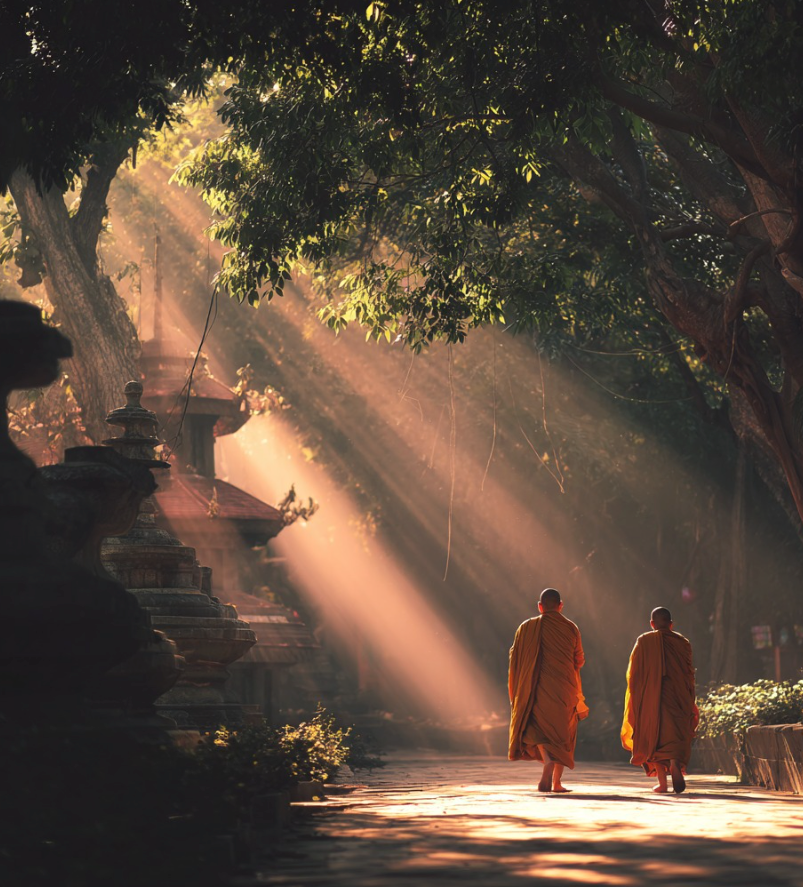
AI can now generate hyper-realistic travel scenes: monks under dramatic beams of light, fishermen casting nets against perfect sunsets, women arranging incense bundles in flawless circles. These images look authentic at first glance — but they are created entirely by algorithms, not by lived reality.
The PetaPixel article even updated its examples using AI-generated visuals, precisely to avoid copyright issues. Some look cartoonish, others shockingly real.
This raises important questions:
If staged travel photos already distort reality, what happens when AI creates scenes that never existed at all?
How do we, as photographers, defend authenticity when a machine can generate perfection in seconds?
Will audiences still value imperfect, real moments when AI can produce endless “ideal” ones?
For me, this only reinforces why I pursue authenticity. A photo taken in real life, however imperfect, carries weight that AI cannot replicate. Behind it, there is always an exchange, a smile, a story, a moment lived. That human presence is something no algorithm can invent.
Authentic Travel Photography Is Still Possible
Despite the growing prevalence of staged photography — and now AI — authentic travel photography is not dead. It requires patience, humility, and sometimes disappointment — because real life doesn’t always align with our vision.
But when it does, the reward is deeper than any staged performance can offer.
Tips I’ve learned on my own journey:
Embrace imperfection – The cluttered street, the uneven light, the half-smile — these carry truth.
Ask, don’t direct – Engage with people, but don’t ask them to pose in ways that distort their reality.
Observe before you shoot – Sometimes the most powerful images come after waiting, not arranging.
Accept missing the shot – Not every dream photo will happen. But in searching for it, you may find something more authentic.
A Call to Photographers
Photography has power. It shapes how cultures are perceived, how traditions are remembered, and how stories are told. When we choose staged scenes, we risk flattening cultures into clichés. When we rely on AI to create our images, we risk replacing reality altogether.
But when we choose authenticity, we allow life to speak for itself. We accept imperfection, and in doing so, we preserve the richness of reality.
So, the next time you find yourself tempted by the staged shot — or the AI-generated one — ask: What story am I really telling?
Because in the end, travel photography is not about bringing home the same postcard everyone else has. It’s about bringing home a story that only you witnessed.
Conclusion
Staged travel photography may be popular, and AI-generated photos may be on the rise, but neither represents the true heart of photography. Authenticity still matters — to the cultures we photograph, to the people we meet, and to ourselves as photographers.
My disappointment in Hanoi became a lesson: if the image looks too perfect, it probably isn’t real. And that’s okay. Because the beauty of photography lies not in perfection, but in presence.

Comments